When you’re writing a high-stakes action scene (like a shootout between your character and the bad guy, or a life-changing car accident), one of the greatest disservices you can do to yourself as an author is to write the scene so that the pacing goes too quickly. What do I mean by this? Let’s use an example—here’s a real, first-draft example from Celena Parish’s novel The Inheritance:
After the holidays, Jessica is driving home from the hotel. The roads leading to her place are winding and slick from earlier rain. Her sports car takes the curves well when suddenly there’s a loud noise and the car starts to swerve. She tries to correct it, frantically turning the steering wheel back and forth to regain control. The car drifts to the cliff side of the road. She slams on the brakes and screams, “Oh God, please, no! No! No!” The momentum takes the car over the edge.

The airbag deploys as the car continuously flips and rolls. The sounds of crunching metal fill her ears. Shards of broken glass cut her face as the steering wheel smashes into her chest.
This action scene drags because of a lack of sensory information. Instead of detail and action, readers get a summarized, this-happened-then-this-happened list of events without emotion or tension. Boring!
Could it be better? You betcha. How do you do this? You slow down time.
Slowing Down Time
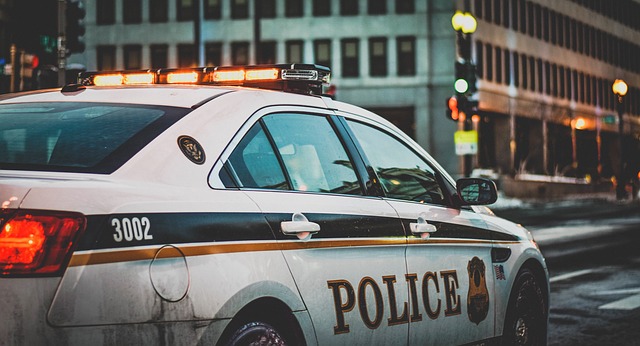
There’s an interesting thing that happens to humans when we’re in conditions of extreme stress, most commonly in life-or-death situations. In fact, police officers who have been involved in shootings all recite similar stories: They experience heightened visual clarity and tunnel vision—they become super focused on the threat—alongside diminished sound (unimportant sounds might appear muffled, or their heartbeat might be thrumming in their ears) and the feeling that time has slowed down.
“This is how the human body reacts to extreme stress,” author Malcom Gladwell writes in Blink: The Power of Thinking without Thinking, and it makes sense. Our mind, faced with a life-threatening situation, drastically limits the range and amount of information that we have to deal with.” This narrowing of senses allows humans to focus on the things that really matter, the threats to eliminate and the actions that will keep them alive.
Here’s how I suggested the author revise that car accident scene:
Her sports car takes the curves well.

CLUNK.

“What was that?” Jessica murmurs.

The steering wheel jerks hard under her fingers, pulling to the side. She tries to correct it, frantically turning the steering wheel back and forth to regain control. “Come on, come on,” she says, panic rising in her chest. The steering wheel is unresponsive, and the car drifts to the cliff side of the road. She slams on the brakes and screams, “Oh God, please, no! No! No!”

The momentum takes the car over the edge.

The airbag deploys as the car cartwheels down the mountainside. The sounds of crunching metal fill her ears, drowning out her screams. Shards of broken glass cut her face.

The steering wheel smashes into her chest, and that’s the last thing she remembers . . .
Could you imagine being in Jessica’s position—the terror of losing control of your vehicle, and tumbling down a cliff? I sure couldn’t. But, well, you’re the author, so this is your job!
Checklist for Slowing Down Time in Writing
How did I do it? Incorporating noises (“CLUNK”), dialogue to show what she’s thinking (“‘What was that?’ Jessica murmurs”), action (“the steering wheel jerks hard under her fingers”), and emotion (“panic rising in her chest”) transforms this from a flat scene to one that is rich with detail and action. It transforms the scene from a lackluster account of a terrifying situation into one that will get readers’ hearts pounding.
Here’s a checklist to use when to slow down time in high-stakes scenes, especially those involving danger, violence, or intense emotion. These elements mimic how the human brain processes stress and trauma—helping the scene feel vivid, immersive, and emotionally charged.
✅ Tunnel Vision: Zoom in on one or two specific, vivid visual details (e.g., the twitch of a finger, the glint of a weapon, cracks in the windshield). Use short, sharp sentences to mimic the character’s narrowed attention. Describe things in slow, deliberate motion: what they see as if it’s frozen in time.
✅ Sound Perception: Include internal sounds (e.g., heartbeat pounding, breath rasping). Muffle or mute background sounds to show shock or disorientation. Mention sudden, jarring noises (e.g., a gunshot, metal crunch, glass shatter) with strong onomatopoeia: CLUNK, CRACK, SCREECH.
✅ Internal Dialogue & Thought: Include fragments of the character’s inner monologue—what they’re fearing, questioning, or hoping in the moment. Show fight-or-flight thoughts: “Is the safety off?” “Should I run?” “Don’t die.”
✅ Sensory Description: Engage multiple senses: what they smell (gasoline, blood), taste (metal, bile), feel (cold metal, broken glass), see (smoke, blood), hear (sirens, screaming). Mention physical sensations: adrenaline, burning lungs, trembling hands, numb fingers, impact pain.
✅ Moment-by-Moment Breakdown: Here’s where the magic happens. Break big actions into micro-movements. Instead of “she fired,” write:“She raised the gun. Her finger found the trigger. She held her breath. Pulled. Bang.” Let time crawl—force the reader to wait for the next beat.
✅ Emotional Pulse: Layer in the character’s emotional response to each beat of action (fear, anger, disbelief). Highlight physiological changes: rising panic, freezing, tunnel vision, nausea. Show vulnerability: crying, praying, screaming, pleading—even if silently.
✅ Line-Level Craft: At the writing mechanics level, vary sentence length to create rhythm and tension. Short bursts = high tension. Use paragraph breaks or single-sentence paragraphs for rhythm and emphasis. Use active verbs and concrete language, and avoid summarizing (“She panicked”) and instead show the panic through body and thought.
Bonus Tip:
Ask yourself: What would a body cam or slow-motion replay show? Then ask: What would the person wearing that camera be feeling in their chest, their gut, their mind?

Book editor Kristen Hamilton is the owner and sole employee of Kristen Corrects, Inc., where she provides manuscript editing services for self-publishing and traditionally publishing authors. Several authors whose books she has edited have won awards and have topped Amazon’s best sellers lists.
Reading is Kristen’s passion, so when the workday is over, she can usually be found curled up with a good book alongside her three cats. In her free time she enjoys playing video games, dancing adult ballet, speaking French, watching scary movies, tending to her courtyard, and traveling to tropical destinations. She lives with her husband and sons outside of Boise, Idaho.